
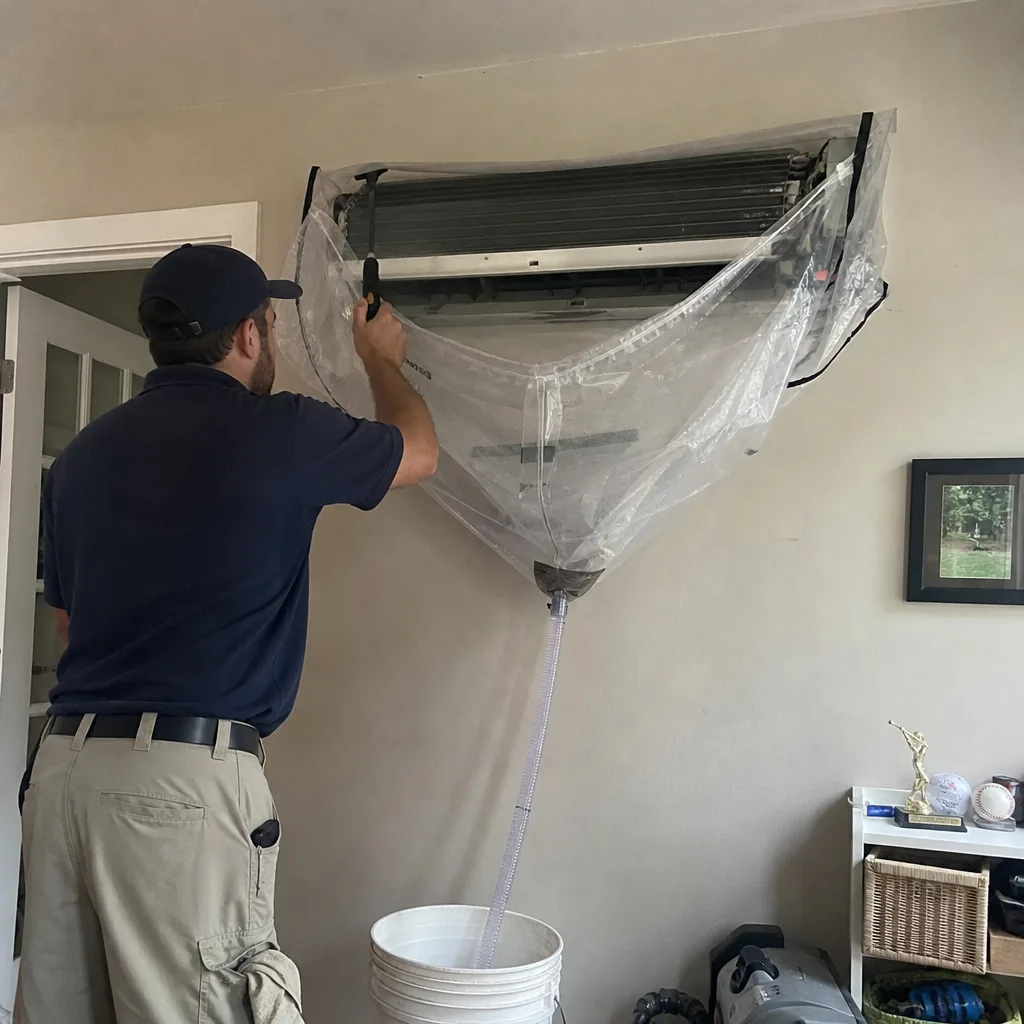
Last updated November 23, 2026
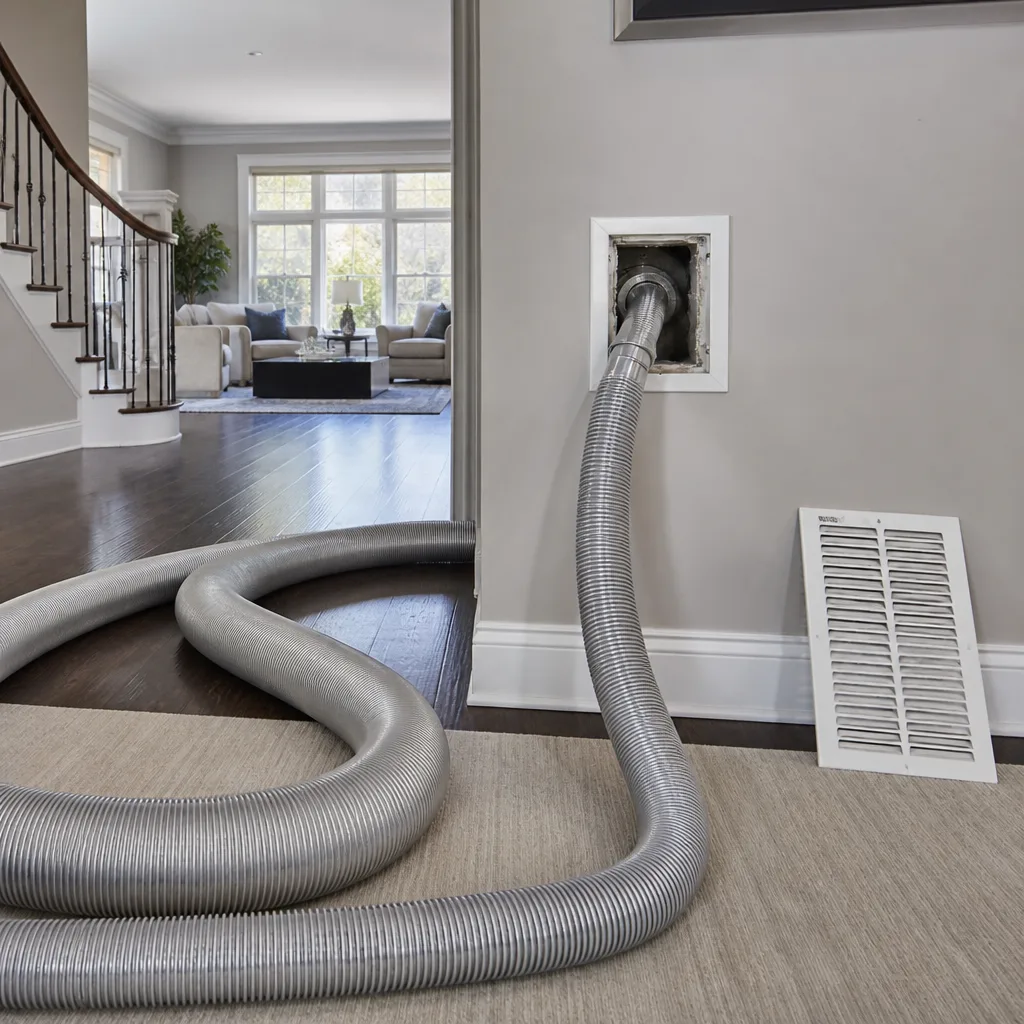 Whole-home duct cleaning
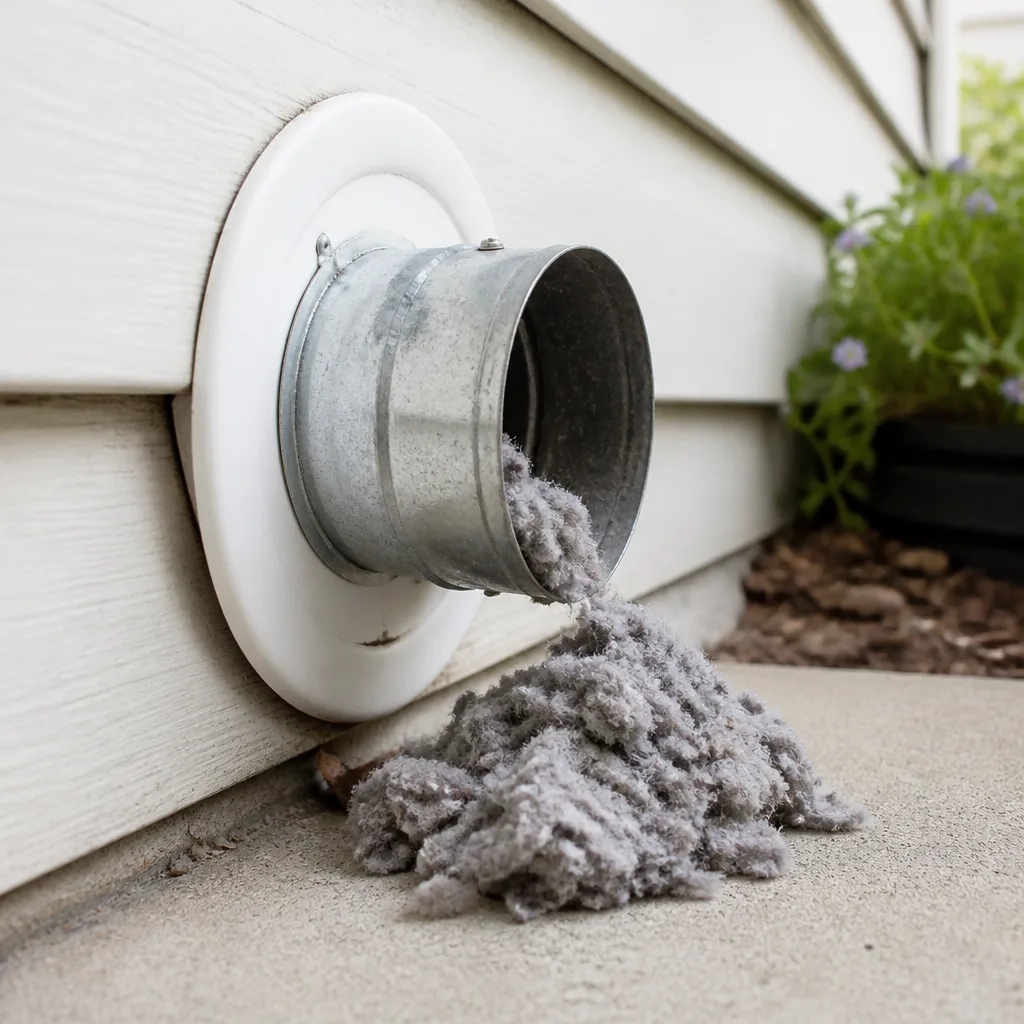 Dryer vent cleaning
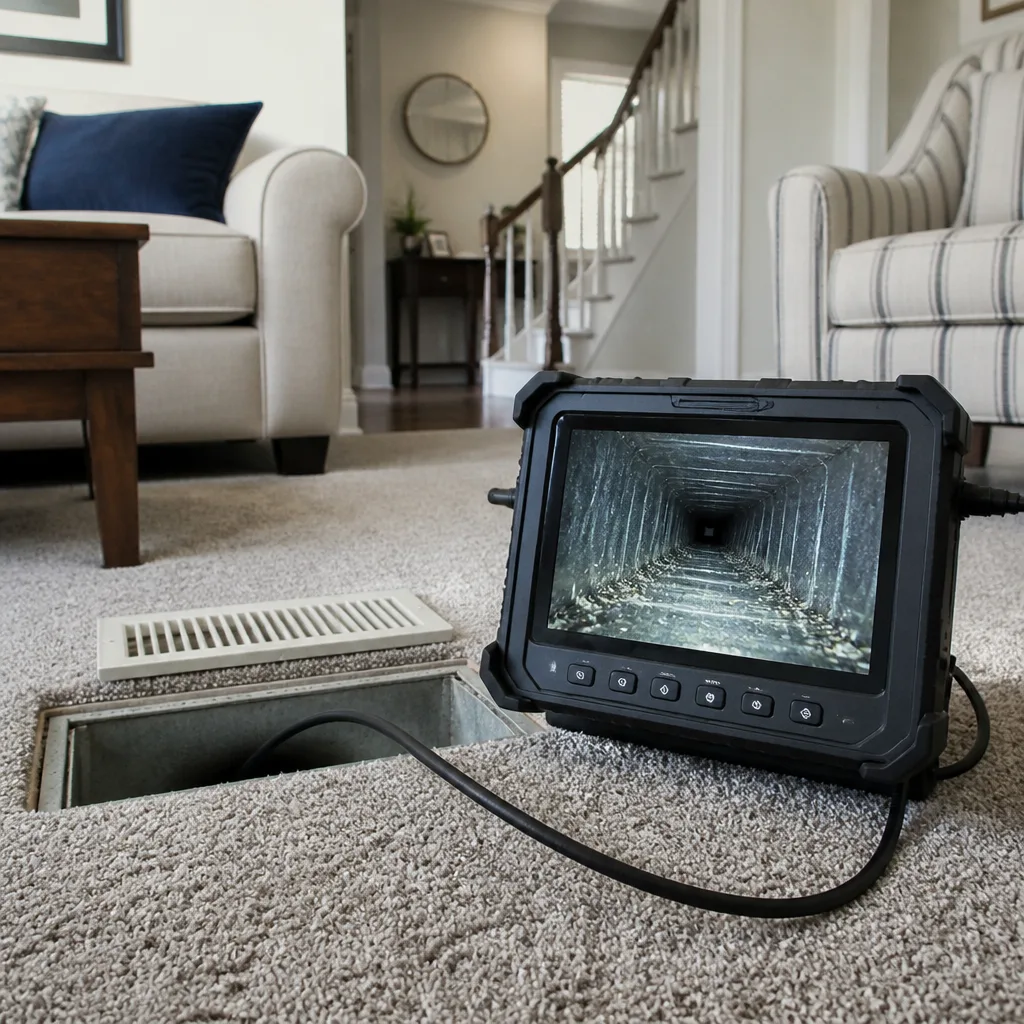 Camera inspection
 Sanitizing & deodorizing
Whole-system duct and dryer vent check with before-and-after photos - you see exactly what came out of your vents
That "$99 whole-house special" is a bait ad - the real number appears once they are in your hallway, or the "clean" is a shop-vac at the register. We photograph the inside of your ducts before and after instead.
Air Duct Cleaning Emergency Preparedness Guide for Donelson Homes
After a house fire, smoke odor that returns months later usually isn’t a psychological effect. It’s soot and volatile compounds that settled into duct liner and were never properly extracted, and they re-volatilize every time the HVAC runs. Most Donelson homeowners clean their ducts on a schedule built around spring pollen or a recent renovation. Almost nobody plans for what the duct system needs after a fire, a flood, or a tornado. Those three events each push different contaminants into the same air pathway, and each one requires a different response. Clean too early, or with the wrong equipment, and you can lock contamination into the system for good. This guide covers the order of operations, the timing, and the insurance paperwork that Donelson households need after an emergency.
Quick Answer
After a fire, shut the HVAC system down immediately and leave it off until a professional inspects the ducts. After water intrusion, duct assessment should happen within 48 to 72 hours, and cleaning should not start until the moisture source is fixed and the loss is documented for your insurer. After a severe storm or tornado, check exterior vents for debris and have the full system inspected before the HVAC runs again. In every case, duct work comes after the source of the problem is stabilized, never before.
Table of Contents
- Why the Duct System Is the Part of Your Home Everyone Forgets After an Emergency
- After a House Fire: Post-Fire Duct Protocol
- Flood and Water Intrusion: The 48-72 Hour Window
- Severe Storm and Tornado Aftermath
- Working With Your Insurance Adjuster on Duct Claims
- The Order of Operations When Multiple Trades Are Involved
- Preparing Before the Emergency Happens
Why the Duct System Is the Part of Your Home Everyone Forgets After an Emergency
When a fire, a burst pipe, or a tornado passes through a Donelson home, the visible damage gets all the attention. The restoration crew, the insurance adjuster, the plumber, and the roofer all focus on what they can see. The duct system runs behind drywall, above ceilings, and under floors, so it’s easy to forget it’s part of the same building envelope. But for weeks and months after an emergency, the HVAC system can keep pulling contaminants through every room of the house.
A duct system is not a closed loop. In a typical Donelson house, returns pull air from living spaces through the air handler, and supply lines push conditioned air back into bedrooms, kitchens, and hallways. Every particulate that reaches a return intake gets distributed through the entire system. Soot, flood silt, insulation fibers, and construction dust travel this way. Duct liner, which is often a porous fiberglass material, absorbs some of it. Rotary brush equipment alone does not fully address embedded contaminants in liner. That’s why professional-grade systems like Rotobrush rotary tools get paired with Nikro HEPA-rated vacuums and, in smoke cases, containment equipment from Abatement Technologies. The point of professional equipment isn’t speed. It’s containment. You want the contaminants captured, not redistributed.
For Donelson homeowners, the local building stock matters here. A lot of houses in the area were built with flexible duct runs in attics and crawlspaces, which are more prone to tearing and more exposed to storm damage than rigid duct. Flexible duct also traps contaminants more aggressively than sheet metal. Older brick homes in the Donelson neighborhoods closer to the Cumberland River have duct systems that have been retrofitted multiple times, sometimes with mismatched sections and imperfect seals. After an emergency, those imperfections become breach points. If you haven’t had your ducts serviced, air duct cleaning before something goes wrong is easier than remediation after damage.
After a House Fire: Post-Fire Duct Protocol
The single most important step after any house fire is to shut off the HVAC system at the thermostat and, if possible, at the breaker. Smoke carries fine soot particles and volatile organic compounds. Every minute the air handler runs, those particles are pulled through the returns, pushed across the air handler coil, and forced into every duct run in the house. Once soot settles into duct liner and residue coats the coil, removal becomes expensive and sometimes impossible without replacing duct sections.
Here’s the order we recommend after a fire in Donelson, and the reasoning behind each step:
- Shut the HVAC off immediately. Thermostat off, and if the system is safe to reach at the breaker, breaker off. This prevents smoke from circulating further.
- Wait for the fire department and insurance adjuster to release the structure. Do not enter or schedule work before the site is cleared for occupancy, even briefly.
- Do not try to “air out” the house by running the fan. This is the most common mistake we see. Running the system pulls smoke into the attic and crawlspace duct runs that might otherwise escape.
- Document the visible smoke damage before anything is cleaned. Every room, thermostat location, return grille, and supply vent. Your adjuster will want the before-photos.
- Schedule a professional post-fire duct assessment. This is different from routine cleaning. Post-fire assessment includes inspection of the duct liner condition, the air handler coil, and any flexible sections that may have absorbed smoke.
- Clean with equipment rated for smoke residue. Rotary brush systems loosen soot from duct walls, HEPA vacuum extraction captures it, and a sanitizing treatment with Guardsman-grade products addresses odor compounds that brushing alone leaves behind.
- Consider duct sealing after cleaning. Fire can cause small cracks at joints and in flexible duct that weren’t there before. Sealing closes them and keeps any residual odor from migrating.
The reason smoke returns months later is that the first cleaning missed the liner. Soot re-volatilizes when the heat comes back on in the fall, and you smell the fire again. A proper post-fire protocol includes a sanitizing step with product-backed treatments, not just brushing. For Donelson homes, the humidity swings between summer and winter make that re-volatilization process more noticeable because the HVAC runs heavy in both seasons.
Flood and Water Intrusion: The 48-72 Hour Window
Water in a duct system is a microbial growth problem on a timer. Mold spores are present in every household, dormant on dry surfaces. Give them moisture and organic dust, and growth can begin within roughly 48 to 72 hours. Duct systems are especially vulnerable because they’re enclosed, poorly ventilated, and often located in attics and crawlspaces where water lingers after a leak or flood.
The logic after a water intrusion event in Donelson, in order:
- Stop the water source and dry the structure first. Duct cleaning before the walls, floors, and framing are dry just reintroduces moisture into a newly cleaned system on the next humid day.
- Document the moisture readings. Your restoration contractor should record relative humidity and moisture content in the affected rooms, and photograph any water staining around duct runs, boots, and return grilles.
- Have the duct system assessed within 48 to 72 hours of the event. The assessment determines whether duct sections need cleaning, sanitizing, or replacement.
- Do not run the HVAC to “dry things out.” This circulates moisture and spores through the whole house. Use the restoration team’s drying equipment instead.
- Clean and sanitize after drying. HEPA extraction removes settled spores and silt, and sanitizing treatments address what remains on surfaces.
- Address leaks in the duct system itself. Duct sealing closes gaps that let humid crawlspace air into the supply runs, which is a chronic problem in Donelson’s older homes.
Whether insurance covers duct cleaning after a flood depends on your policy and on documentation. If your adjuster sees moisture readings, water staining, and a professional assessment report that connects the damage to the event, the claim moves faster. If you call a duct cleaner the day after water intrudes and there’s no paper trail, the duct work often falls outside the covered scope.
Severe Storm and Tornado Aftermath
Middle Tennessee storm systems push debris that reaches the duct system in ways homeowners don’t expect. Wind-driven rain carries grit and vegetation into exterior vent hoods and fresh-air intakes. Pressure differentials around a tornado or straight-line wind event can flex duct connections at boots and plenums, loosening seals that had been airtight. And large debris falling on the roof or side of the house can crush or dislodge attic duct runs even when the visible damage looks modest.
After any severe storm in Donelson, a few checks are worth doing before you turn the HVAC back on:
- Walk the exterior and check the dryer vent and fresh-air intake hoods for debris, nests, or damage. The dryer vent cleaning line on your house is one of the most commonly neglected exterior penetrations in a storm event, and a blocked vent is a fire hazard on top of an efficiency problem.
- Look at the attic ductwork if it’s accessible. Flexible runs can be crushed by falling limbs or attic debris, which chokes airflow and creates a pressure problem downstream.
- Check for water staining at ceiling supply vents. Water in a duct system from a roof leak is a moisture problem in the making.
- Turn the system on briefly and listen for rattle or hiss at the boots and plenums. Popping or whistling can mean a seal has opened.
- Pay attention to increased dust in the days after the storm. If dust comes back faster than usual, the return side of the system may be pulling air from a newly opened gap.
A full system inspection is warranted after any tornado or wind event above minor severity, even when you can’t see damage. The cheapest path is a comprehensive inspection of duct connections, insulation condition, and the air handler coil before the system runs for weeks with compromised seals. HVAC cleaning as part of that inspection gives you a clean baseline so any new problem is visible.
Working With Your Insurance Adjuster on Duct Claims
Duct-related emergency claims live or die on documentation. Adjusters are not duct experts. They apply a scheduled scope, and the adjuster’s job is to confirm that what’s claimed is real, related to the covered event, and reasonable in cost. A contractor who hands over a clear, photo-documented report is going to be easier to work with than one who submits a one-page invoice.
Here’s what documentation typically supports a duct-related emergency claim:
- Before-photos of the visible damage. Smoke staining on return grilles, water intrusion at boots, debris at vent hoods, damaged duct insulation. Adjusters want dates and timestamps.
- Moisture readings from the restoration team if the event involved water.
- A scope of work that lists duct cleaning, sanitizing, and any repair separately, with each line tied to the specific damage observed. A single lump-sum price is much harder for an adjuster to approve.
- Equipment description. This is where professional-grade gear matters in a claim. A contractor who documents the use of Rotobrush rotary tools, Nikro HEPA vacuums, and where applicable Abatement Technologies containment equipment gives the adjuster a credible reason for the scope. Consumer-grade tools don’t support the same scope.
- Post-cleaning verification photos inside the ducts before and after. Before-and-after photos of your own ducts are the simplest proof that the work happened.
- Product documentation for any sanitizing treatment, which is why Guardsman-grade products matter on the insurance side as well as the air quality side.
Adjusters typically look for three things above all: causation (the duct problem traces to the covered event), reasonable scope (line items match the damage), and completion evidence (photos and a report after work is done). If your contractor can provide all three, the claim moves. If the report is thin, expect the duct line to get cut.
What you should not do is run duct cleaning before the adjuster has inspected or authorized. In most policies, emergency mitigation work can start immediately if it prevents further damage, but standard cleaning does not qualify as emergency mitigation. If you’re unsure, call your adjuster’s office before you schedule anything.
The Order of Operations When Multiple Trades Are Involved
After a significant emergency, you’re coordinating several trades at once. A restoration contractor, an electrician, a roofer, a plumber, sometimes a general contractor, and eventually a duct cleaning and remediation provider. Timing is where most Donelson households lose value. Duct cleaning scheduled too early in the process simply undoes itself. Duct cleaning scheduled too late risks contaminants being sealed into the system by later work.
Here’s the sequence that generally holds up:
- Stabilize the structure. Board-up, water extraction, electrical safety check, roof tarp if needed. Nothing duct-related should happen until the building is safe to enter.
- Document everything. Photos, moisture readings, and an itemized scope from each trade. This is the stage where most insurance value is created or lost.
- Get the adjuster’s scope and approval before non-emergency work begins.
- Dry the structure completely if water was involved. Duct work before this is wasted.
- Do the heavy demolition and reconstruction first (drywall, framing, roofing). Dust from this phase will end up in the ducts regardless.
- Clean the ducts after reconstruction dust settles but before final finishes and furnishings go in. This is the sweet spot.
- Sanitize, seal, and integrate air quality upgrades last. This is where Honeywell or Aprilaire filtration and humidity upgrades can ride alongside the cleaning rather than requiring a second contractor visit.
- Do a post-cleaning verification and photo record. Before-and-after photos inside the ducts, and a report you keep with the claim file.
The rule of thumb: duct work goes after the dust is generated, before the house is occupied. If a general contractor tries to schedule duct cleaning in the middle of drywall work, push back. You’ll pay twice.
Preparing Before the Emergency Happens
Most of the value in this guide is in knowing what to do when something happens. But a few steps taken before an emergency make the aftermath much easier to manage in Donelson homes.
- Know where your HVAC breaker is. In a fire or flood, being able to kill power to the air handler quickly prevents smoke and moisture from circulating through the house.
- Photograph your duct system now, inside the returns and supplies if you can, and store the photos in the cloud. Having a pre-event baseline makes “was this damaged by the event?” much easier to answer.
- Keep a simple binder with your policy number, adjuster contact, HVAC service records, and photos. Add to it after any service visit.
- Have your ducts cleaned on a maintenance schedule, not just after emergencies. Clean ducts are easier to inspect and easier to return to normal after an event.
- Have your dryer vent cleaned annually. Storm damage and lint buildup compound each other, and the vent is one of the most common failure points in a house during an event.
- Ask your HVAC provider what containment equipment they use. If the answer is “a shop vac,” call someone else. The Air Duct Cleaning Donelson team uses Rotobrush rotary systems, Nikro HEPA vacuums, and Abatement Technologies equipment on-site for jobs that need real containment.
Our technicians have up to 8 years of experience with post-emergency duct work, and the pattern we see most often is homeowners calling before the source problem is fixed. A five-minute conversation about the sequence before you schedule can save you hundreds on repeated cleaning.
Styles & brands we work with
- Whole-home duct cleaning
- Dryer vent cleaning
- Camera inspection
- Sanitizing & deodorizing
Common Mistakes to Avoid
- Running the HVAC after a fire to “clear the air.” This is the single most damaging mistake. It distributes soot into every duct run in the house.
- Cleaning ducts before the structure is dry. In a flood, cleaning a wet system means doing the work twice. Wait for moisture readings to come back to normal.
- Hiring the cheapest coupon duct cleaner after an insurance event. Cheap quotes usually mean consumer-grade equipment and no documentation. Adjusters won’t accept a one-page invoice as proof of scope.
- Skipping the sanitizing step after smoke damage. Brushing alone leaves odor compounds in duct liner. The smell returns when the heat comes back.
- Not photographing before work starts. Without before-photos, the claim for duct damage is a he-said-she-said conversation with your adjuster.
- Cleaning ducts in the middle of reconstruction. Drywall dust ends up in the freshly cleaned system within a day. Schedule duct work for the end of the project, not the middle.
- Ignoring flexible duct damage after storm events. A crushed or torn flex run in the attic can push unfiltered air into living spaces for years before anyone notices.
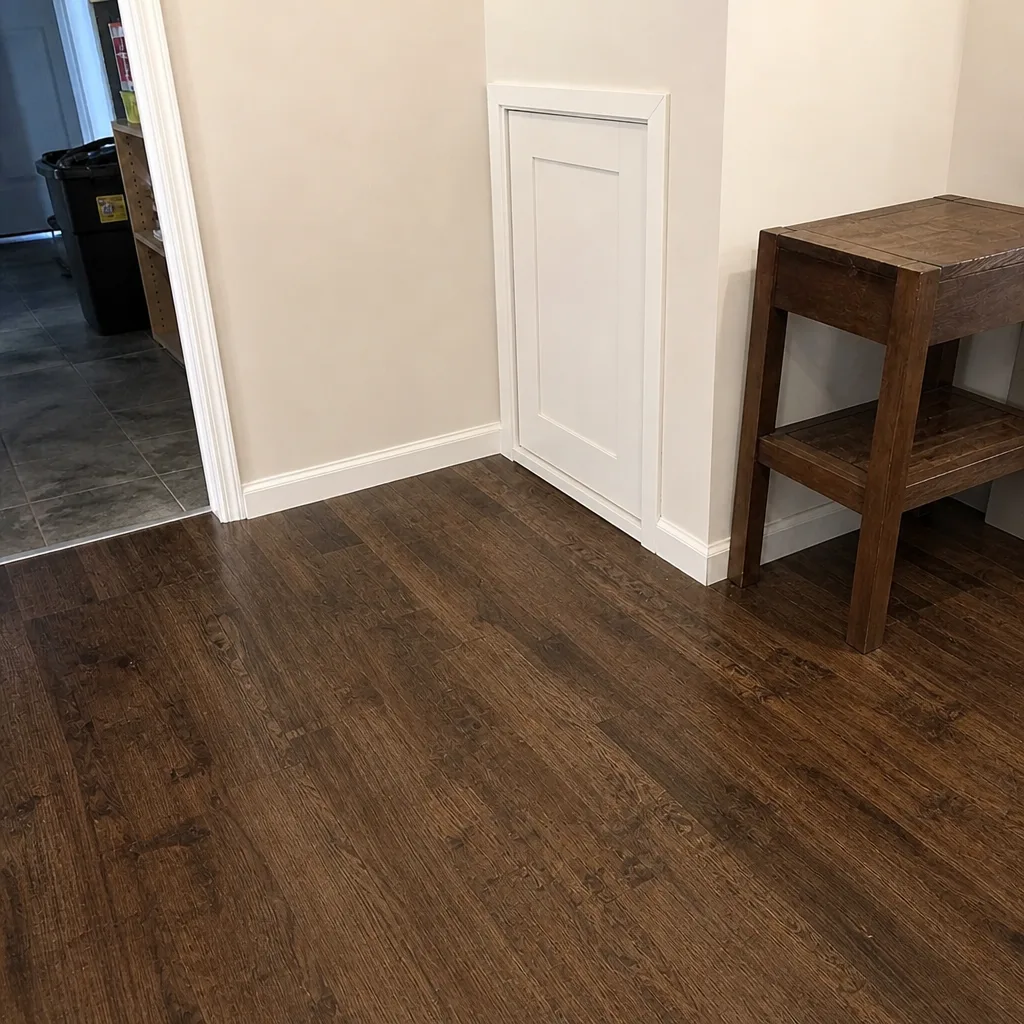
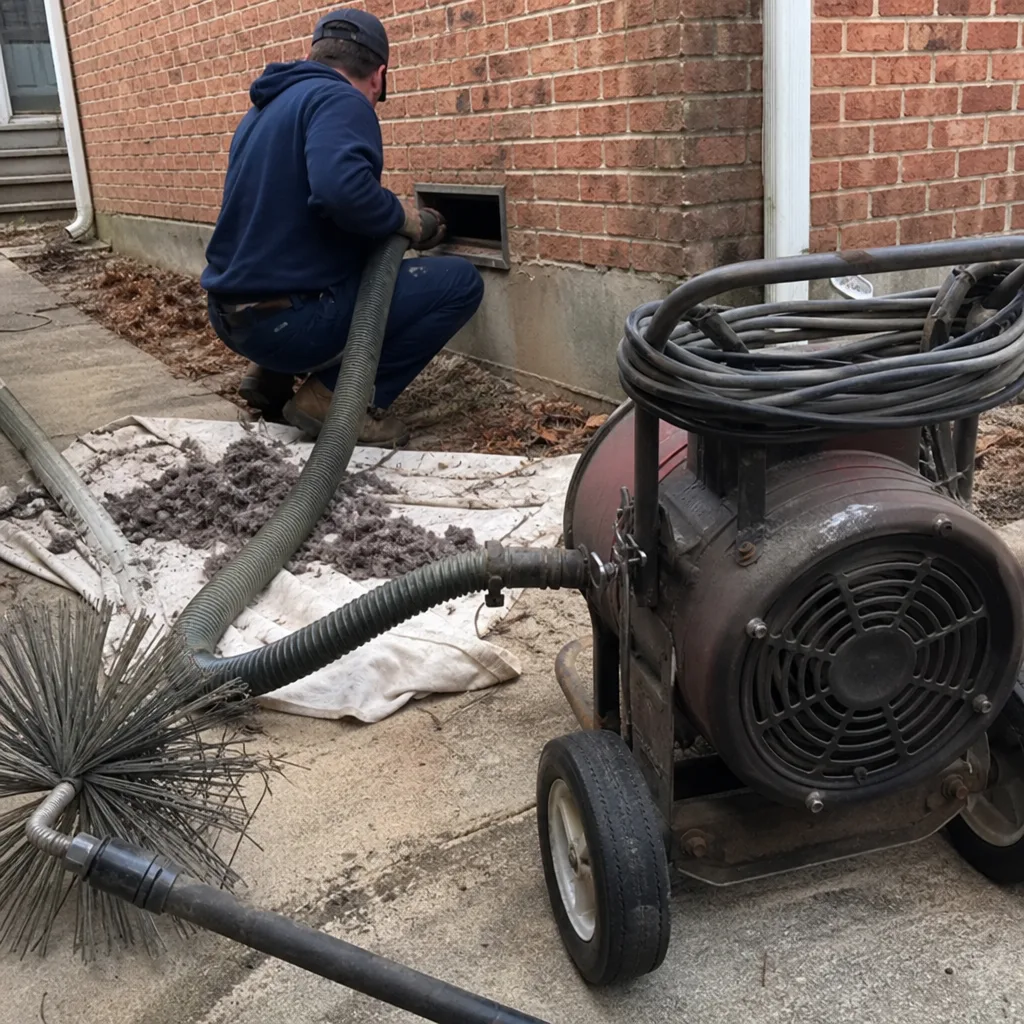
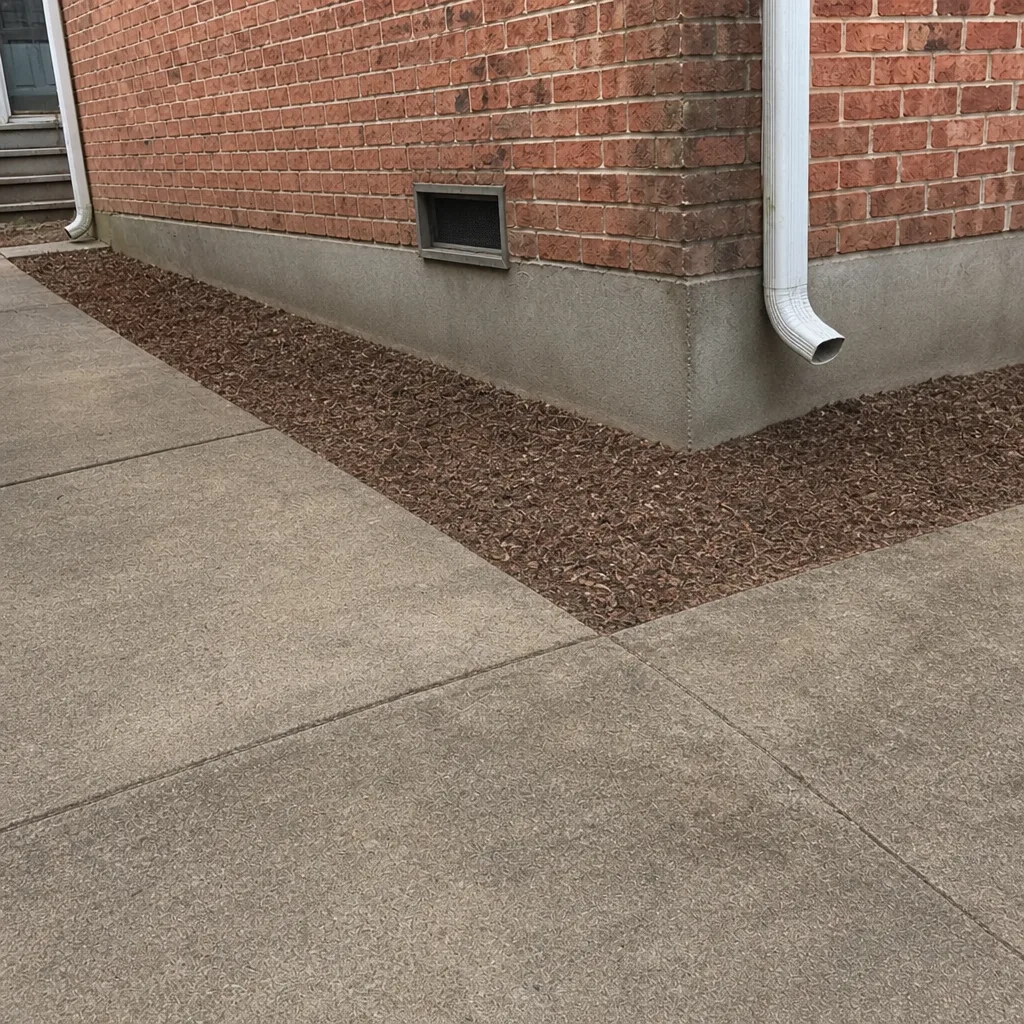
See the difference
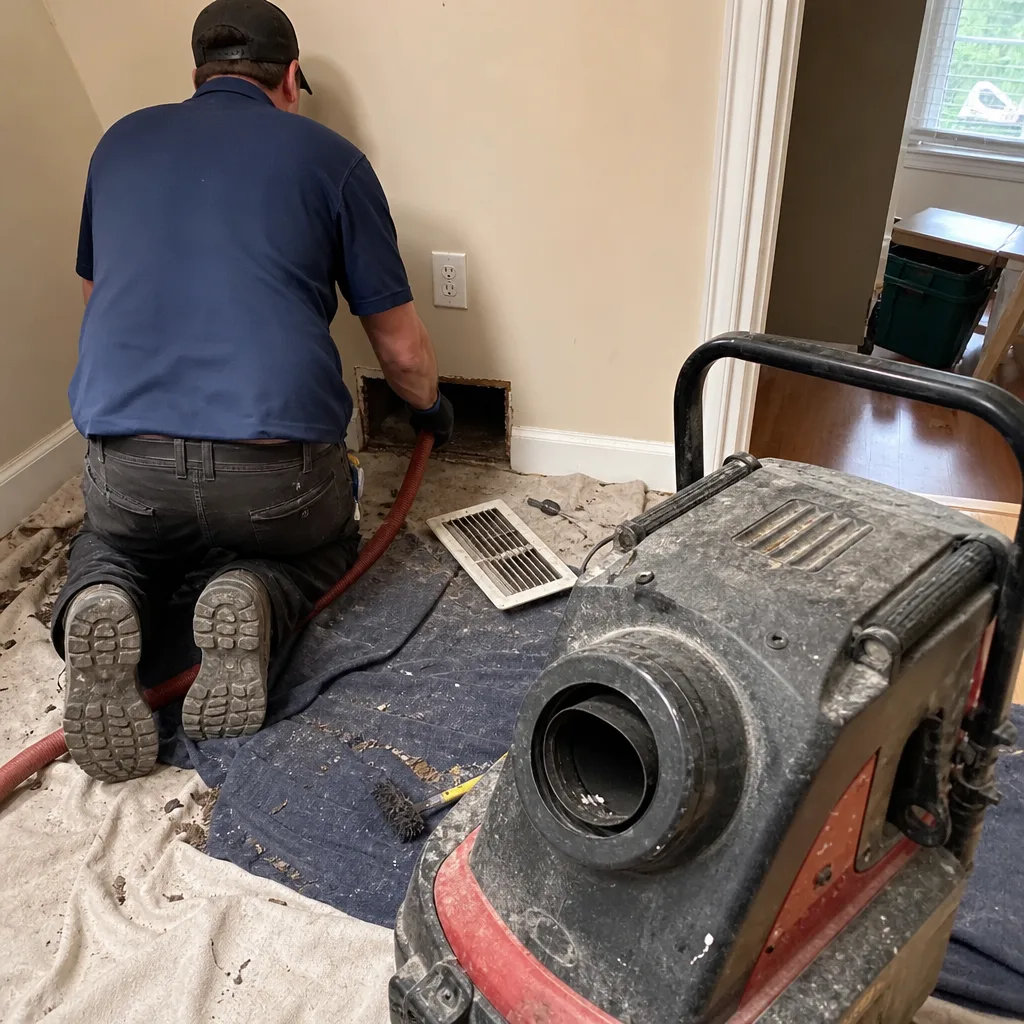 Before
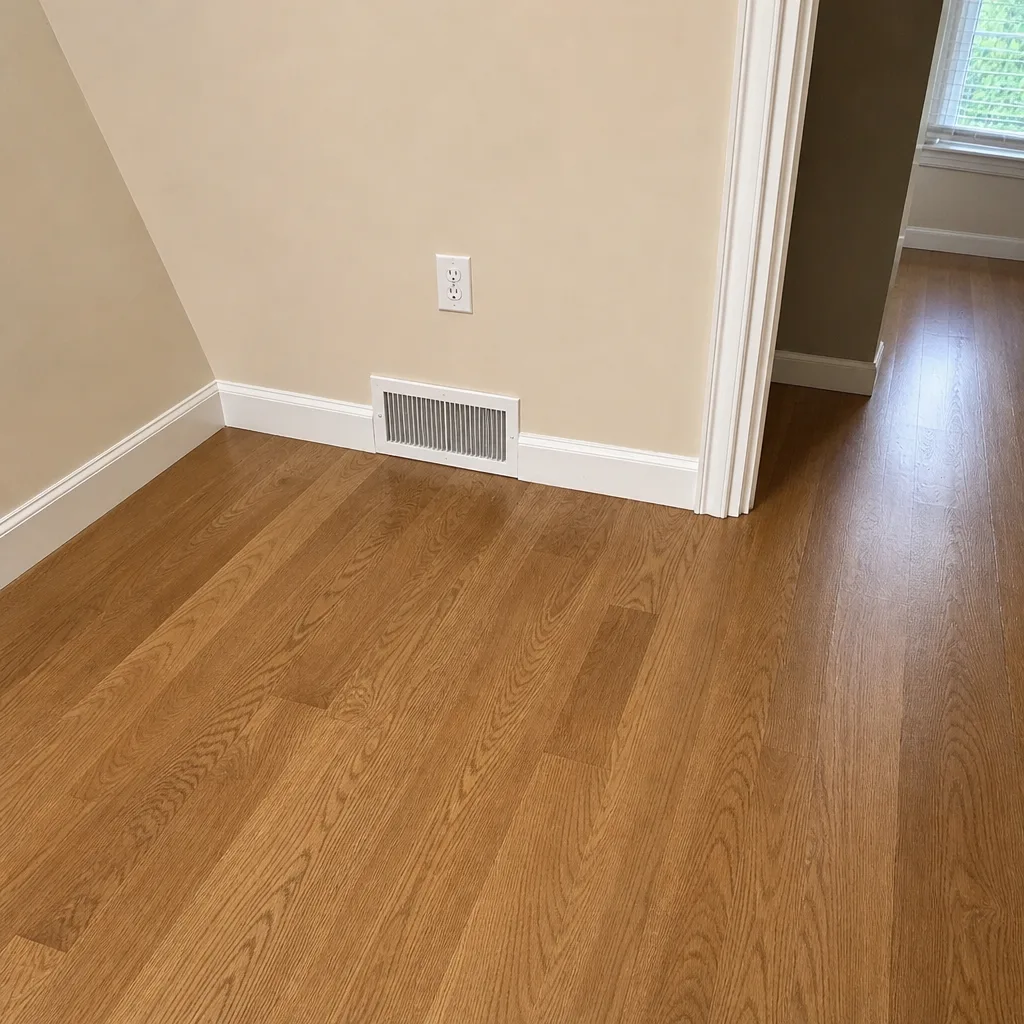 After
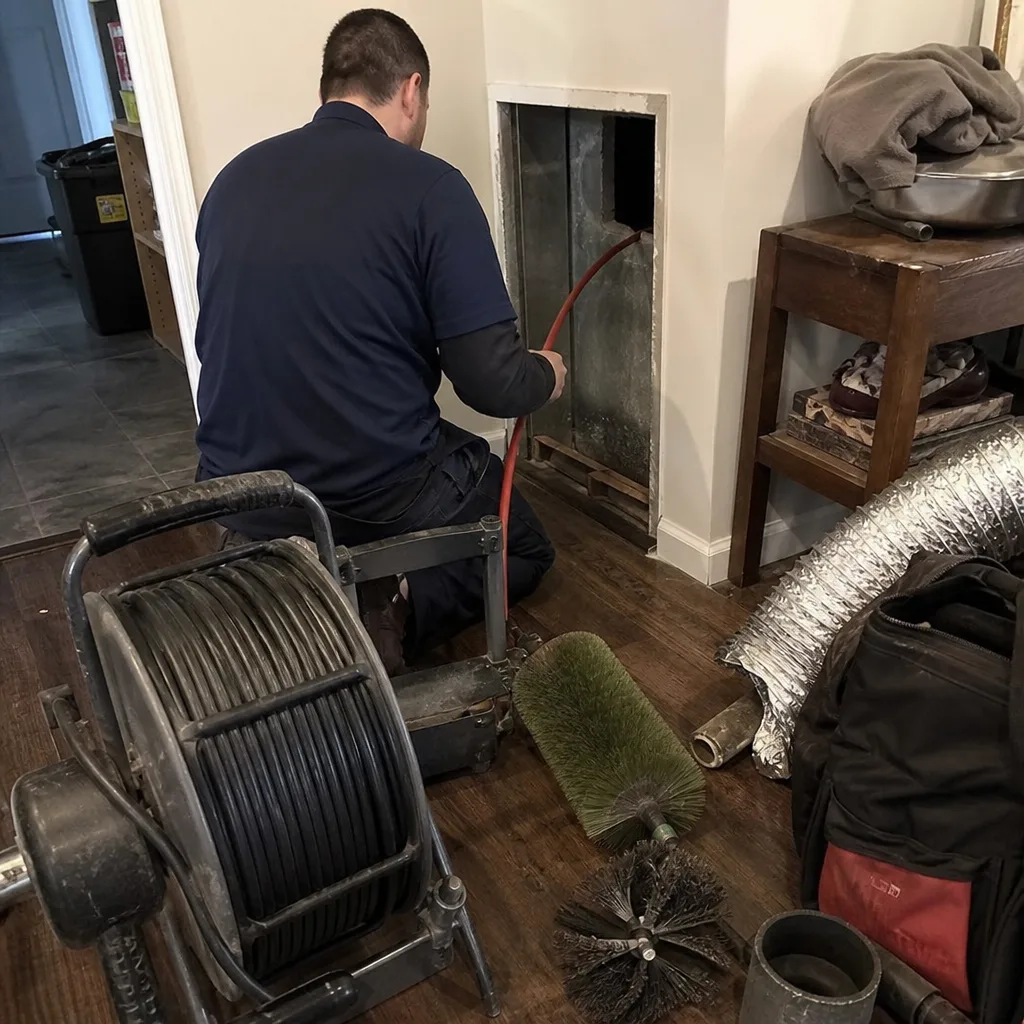 Before
 After
 Before
 After
When to Call a Professional
Routine dust and seasonal allergies are something you can schedule on your own timeline. Post-emergency duct work is not. Call a professional if your home has had a fire of any size, water intrusion that reached walls or floors, a storm event that hit the roof or side of the house, visible mold on duct grilles, or a persistent musty smell that comes back when the HVAC runs. Call also if your insurance adjuster has opened a claim that includes duct inspection. And call if your HVAC has never been cleaned and you don’t know its condition. Air Duct Cleaning Donelson offers free estimates in Donelson – call (866) 947-9316. We answer 24/7. Fast dispatch from 7am to 7pm, Sunday through Friday.
Frequently Asked Questions
Have the ducts assessed as soon as the structure is cleared for entry and your insurance adjuster has been notified. Shut the HVAC off immediately after the fire, and do not run it until a professional inspects the ducts. Cleaning can usually happen within the first week or two once the site is safe.
Mold growth can begin within roughly 48 to 72 hours of water intrusion if the duct system stays moist. The larger issue is that ducts stay damp longer than open rooms because they’re enclosed, so professional assessment within that window matters even if you don’t smell anything yet. If water reached the system, don’t wait for a smell to schedule an inspection.
Coverage depends on your policy and on documentation. Most policies cover duct cleaning when it’s directly related to a covered event like a fire or sudden water damage, and usually not for routine maintenance. The key is having a report from your duct contractor that ties the scope to the specific damage, with photos and equipment description.
Soot and volatile compounds embedded in duct liner re-volatilize when the HVAC runs and heat returns. If the initial cleaning only brushed surfaces and didn’t include a proper sanitizing step with product-backed treatments, the residual smell returns as soon as the system gets warm again. A second cleaning focused on the liner and air handler coil usually resolves it.
No. Consumer vacuums and shop vacs don’t have the containment or filtration to handle smoke residue, mold spores, or fine storm dust, and DIY attempts can push contaminants deeper into the system. Post-emergency duct work needs professional-grade extraction and containment equipment, and the documentation matters for your insurance claim.
Yes, particularly if the tornado or severe wind event hit your roof or the side of the house. Pressure differentials and debris can loosen duct connections and crush flexible duct runs without visible damage inside the house. A full system inspection catches those before the HVAC runs for weeks with compromised seals.
The Bottom Line
Emergency duct work after a fire, flood, or storm comes down to three things: shut the system off, document everything, and wait for the source problem to be fixed before cleaning. In Donelson, the homes most affected tend to have flexible duct in attics and crawlspaces, which are the same systems that absorb smoke and moisture most aggressively. Professional-grade equipment makes the difference; the right protocol makes the result last. If you’re facing a duct situation after an emergency, call (866) 947-9316 for a free estimate. We answer 24/7. Fast dispatch from 7am to 7pm, Sunday through Friday.
Written by the team at Air Duct Cleaning Donelson.