
Last updated November 23, 2026
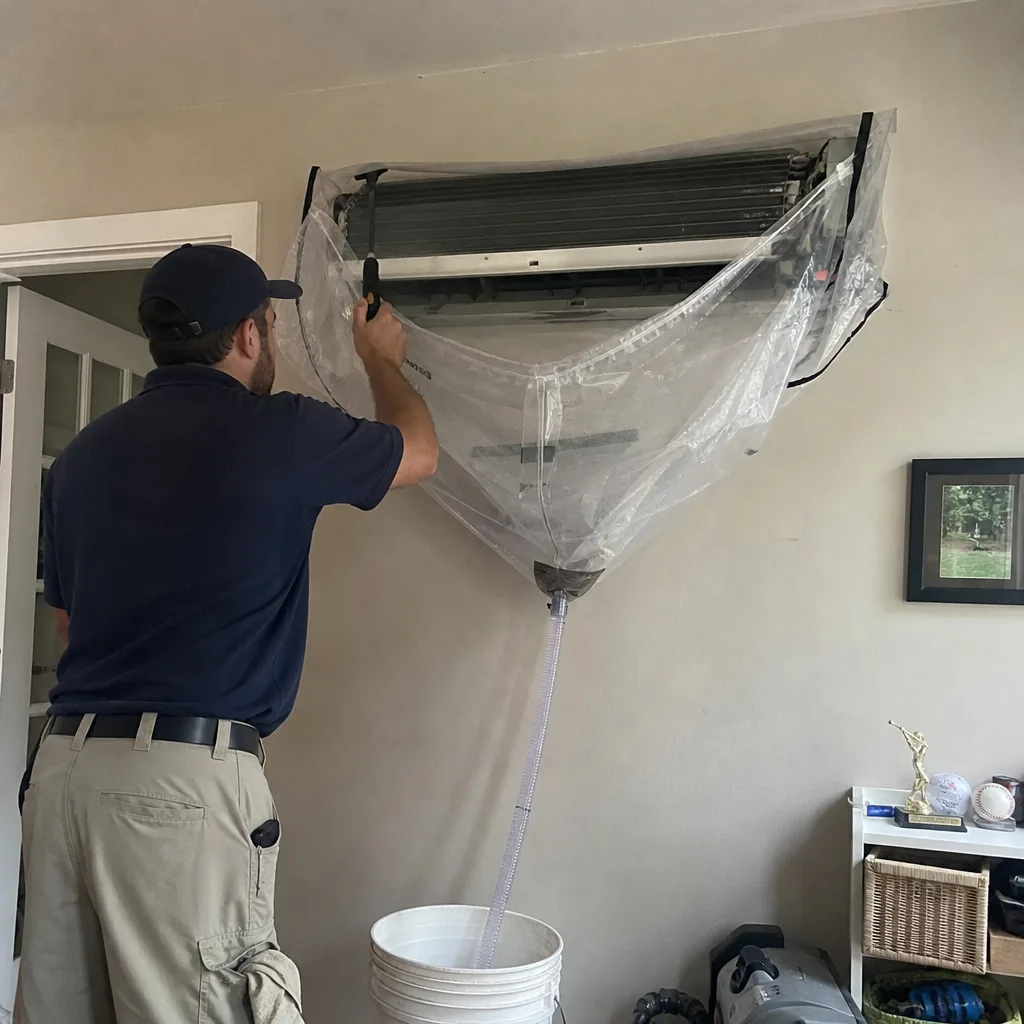
 Whole-home duct cleaning
 Dryer vent cleaning
 Camera inspection
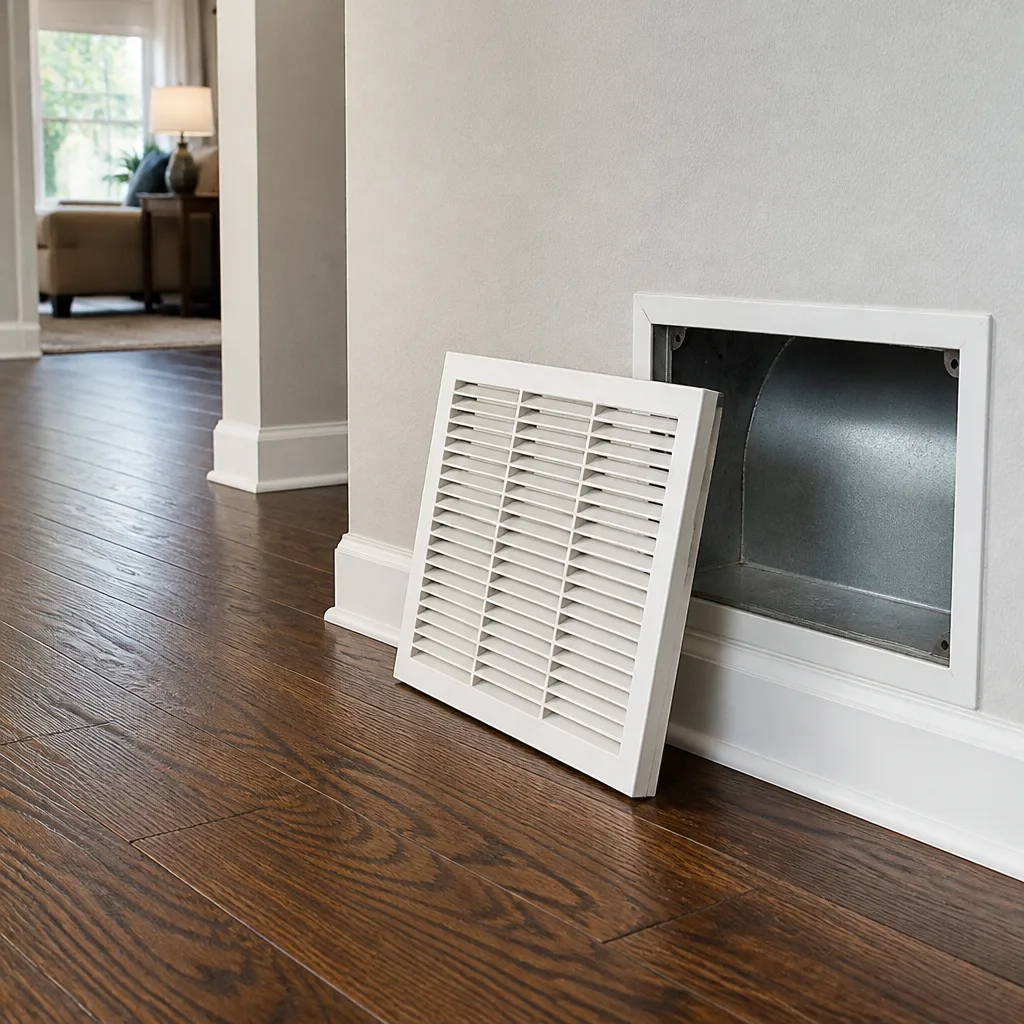 Sanitizing & deodorizing
Whole-system duct and dryer vent check with before-and-after photos - you see exactly what came out of your vents
That "$99 whole-house special" is a bait ad - the real number appears once they are in your hallway, or the "clean" is a shop-vac at the register. We photograph the inside of your ducts before and after instead.
The Complete Guide to Air Duct Cleaning in Donelson
A shop-vac and a brush can reach about 6 feet into a duct. Most Donelson homes have well over 100 linear feet of ductwork running through walls, ceilings, crawlspaces and attic chases, which means a quick surface pass touches a small fraction of the system that moves your air. Cleaning that actually matters is a full-pathway job: return grilles, trunk lines, branch runs, the air handler cabinet, the blower, the coil and every supply register. This guide maps each component, explains what professional equipment does at every stage, and shows you how to judge a thorough job before anyone knocks on your door. If you want to know what real air duct cleaning looks like, you’re in the right place.
Quick Answer
Air duct cleaning in Donelson means removing accumulated dust, debris and biological growth from every part of the air pathway, not just the ducts you can see, and then verifying the result. A complete job covers return grilles, trunk and branch ducts, the air handler cabinet, blower wheel, evaporator coil and supply registers, using source-removal equipment such as a rotary brush system paired with a HEPA-rated vacuum. Anything less is a partial cleaning dressed up as a full one.
Styles & brands we work with
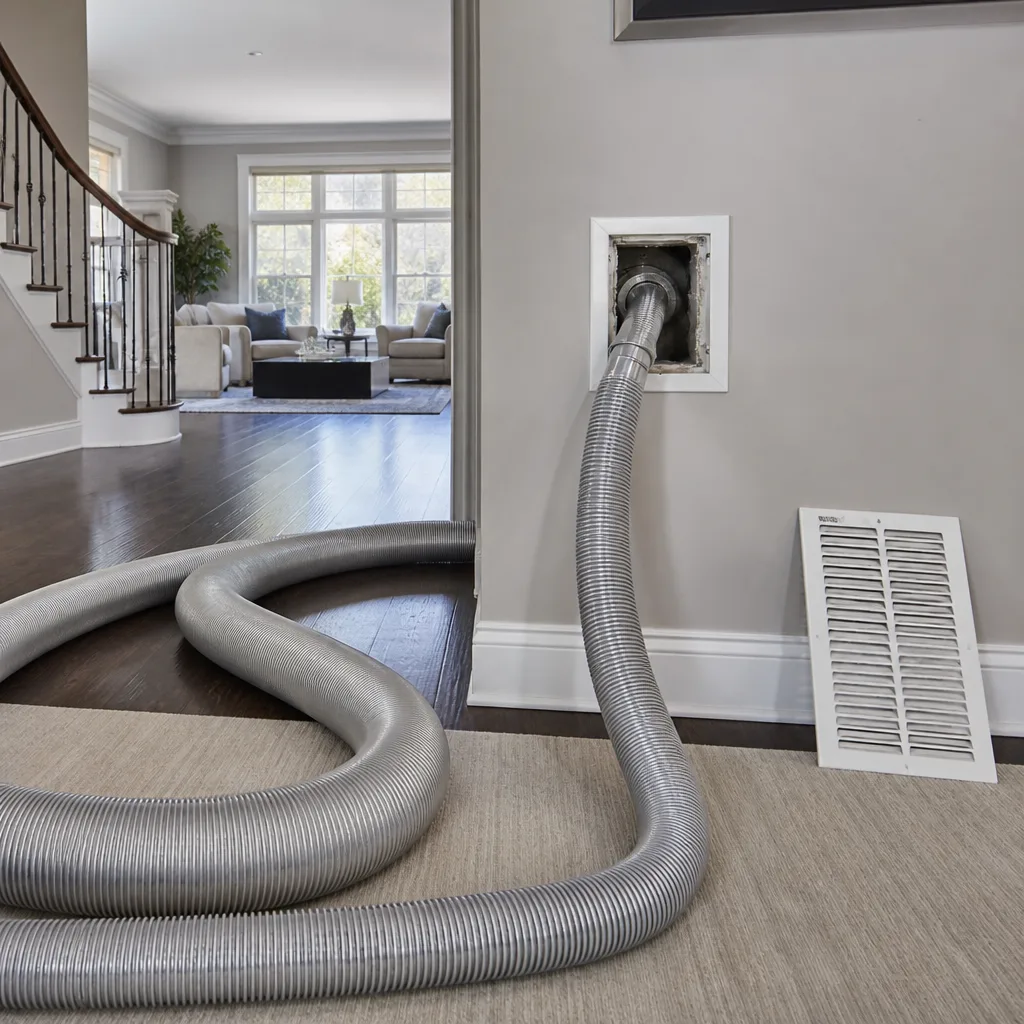
- Whole-home duct cleaning
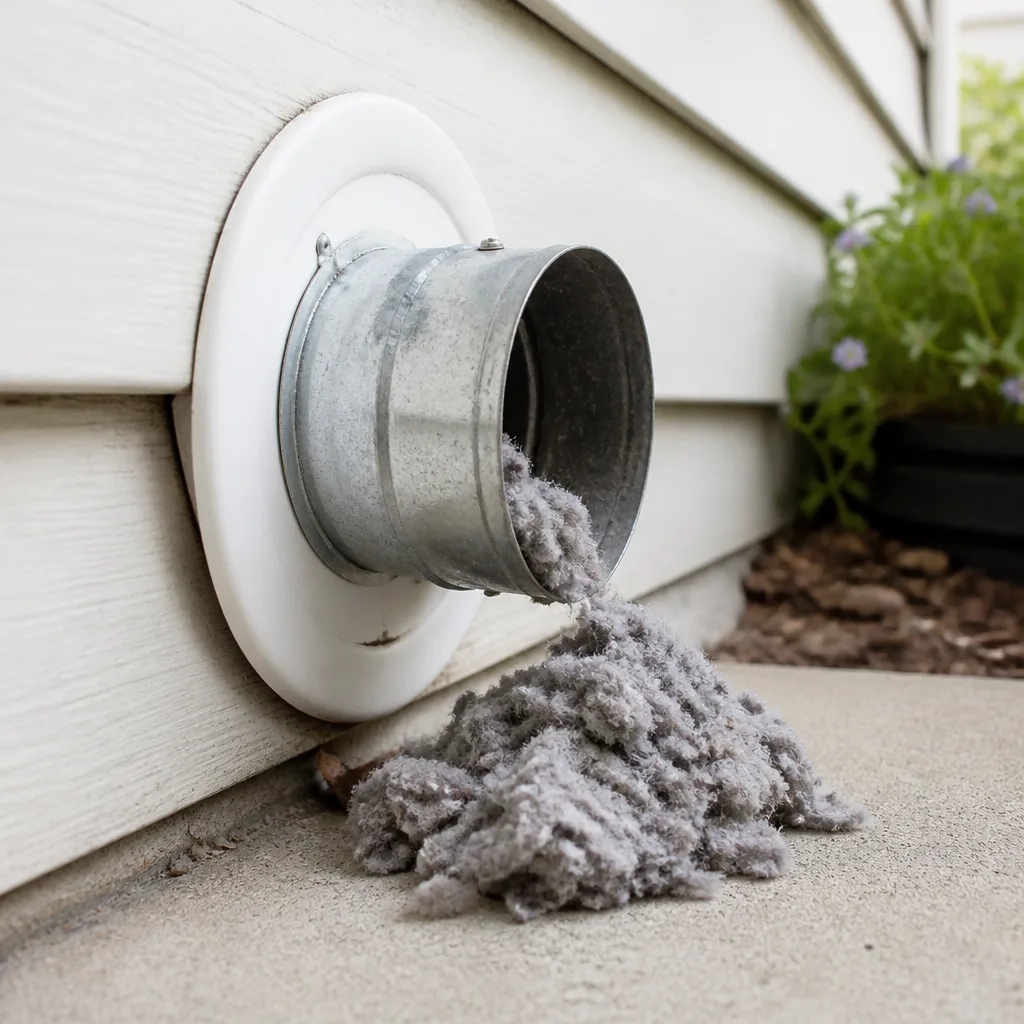
- Dryer vent cleaning
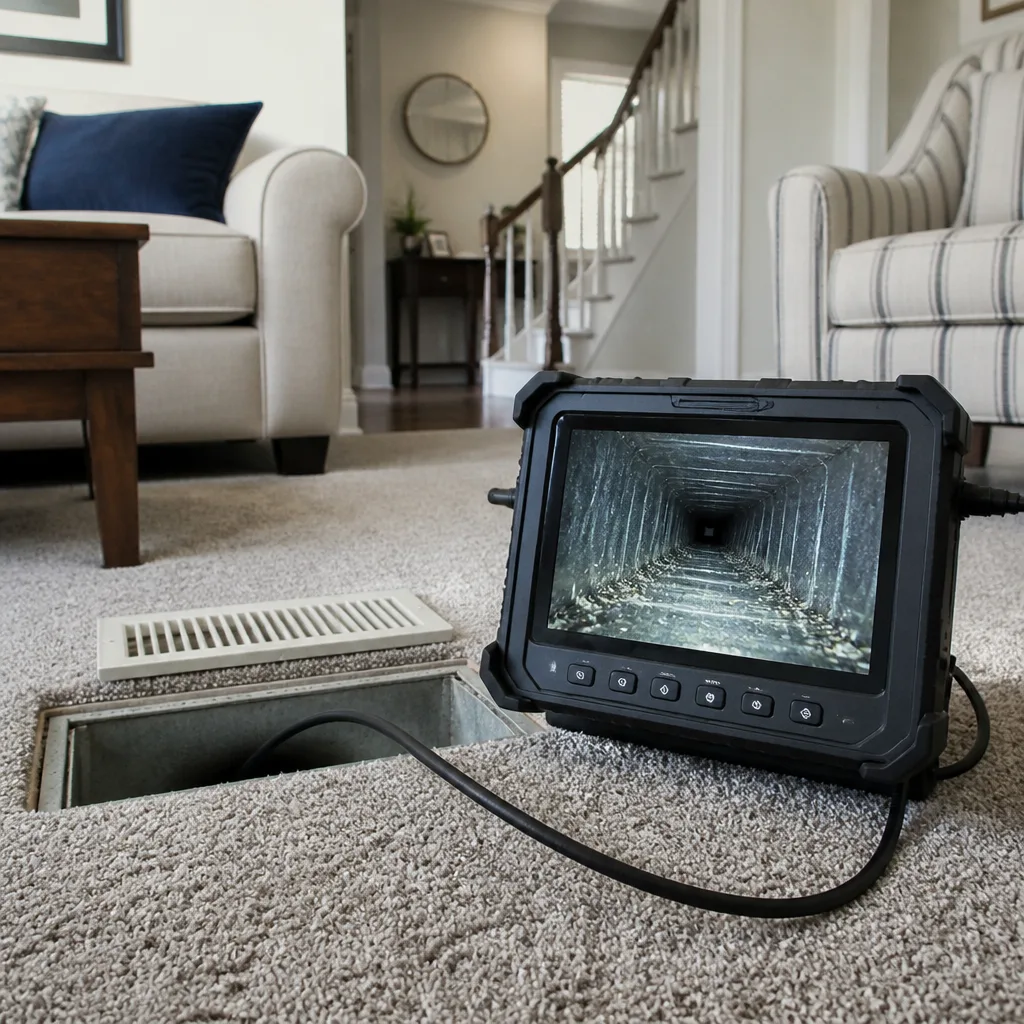
- Camera inspection
- Sanitizing & deodorizing
Table of Contents
- Why Donelson Homes Need a Full-System View
- The Anatomy of Your Duct System: What Gets Cleaned Where
- How Donelson’s Housing Stock Changes the Job
- Source Removal vs. Blow-and-Go: How to Tell the Difference
- The Air Handler, Blower and Coil: The Parts Most Quotes Skip
- Beyond Cleaning: Sealing, Sanitizing and Filtration
- Post-Cleaning Verification: What a Credible Contractor Documents
- What Air Duct Cleaning Costs in Donelson
Why Donelson Homes Need a Full-System View
Donelson sits in a humid subtropical stretch of Middle Tennessee, and that matters for ductwork. Summers run long and muggy, so the air conditioning system moves a heavy volume of cooled air for months on end, and condensation forms on cold surfaces whenever warm, moist air meets them. Winters swing between mild and genuinely cold, which means the heating side of the system gets a real workout too. In a climate with this much moisture in the air, a duct system that leaks or holds debris doesn’t just lose efficiency; it gives mold and mildew a place to settle. That’s why a partial cleaning can leave a homeowner feeling like nothing changed.
The housing stock reinforces the point. Much of Donelson was built out during the postwar decades and the 1960s through the 1980s, when ranch-style and split-level floor plans were standard. Those homes were designed around forced-air systems that have since been repaired, extended and sometimes partially replaced. Duct runs in a Donelson ranch often travel through a low attic or a crawlspace, and branch lines can be short, numerous and tucked behind finished ceilings. In a split-level, the air handler sits between levels and the ductwork fans out in several directions at once. Each layout demands its own access strategy, and a crew that arrives expecting a simple straight-run basement system will miss sections of the house entirely.
Add the local allergen load. Donelson has mature tree canopy, plenty of spring pollen and long stretches where windows stay shut and the system recirculates indoor air. Dust, pet dander and pollen accumulate in return ducts and on the blower wheel, then get redistributed every time the fan runs. When we talk with homeowners here, the complaint is usually the same: the house feels dusty no matter how often they clean, or a musty smell shows up when the AC kicks on. Those are full-pathway problems, and they need full-pathway answers.
The Anatomy of Your Duct System: What Gets Cleaned Where
A residential forced-air system is a chain, and every link affects the air you breathe. Understanding the components helps you ask better questions when a contractor quotes the job. Here’s how the pathway runs and what professional cleaning does at each stage.
- Return grilles and return ducts. This is where household air re-enters the system, carrying dust, hair and debris. A technician removes the grille, cleans it, then works the return run with a rotary brush and vacuum to pull settled material back toward the collection point rather than pushing it downstream.
- Trunk lines. The main distribution ducts carry the largest volume of air and collect the most sediment over time. Rotary brush systems such as the Rotobrush line agitate material off the duct walls so a HEPA-rated vacuum can capture it.
- Branch runs and supply boots. The smaller ducts feeding individual rooms are where cheap cleanings fall short, because reaching them requires access cuts and flexible tooling. Each branch should be brushed and vacuumed, not simply blasted with air.
- The air handler cabinet. The metal box housing the blower and coil is often the dirtiest part of the system and the most frequently skipped. Cleaning it means removing panels, brushing surfaces and vacuuming the interior.
- Blower wheel and evaporator coil. The blower wheel slings air through the system, and a caked wheel loses efficiency and sheds debris. The evaporator coil, which dehumidifies the air, traps dust on its fins and needs careful cleaning with the right tools so the fins aren’t bent.
- Supply registers. The final point of delivery. Each register is removed, cleaned and reinstalled so the air entering a room is coming through a clean opening.
Notice that the job starts at the returns and ends at the supplies. A contractor who only works the supply side, or who never touches the air handler, has cleaned one end of a two-ended system. The whole point of full-pathway service is that nothing gets skipped.
How Donelson’s Housing Stock Changes the Job
Not every Donelson home is a ranch, but enough of them are that the local job profile looks different from a newer suburb full of flexible-duct construction. The older ranch and split-level homes around Donelson tend to share a few characteristics that a contractor needs to plan around.
- Rigid sheet-metal ducts with hard 90-degree turns. These are durable but unforgiving; debris collects at the elbows, and tooling has to reach around corners rather than slide straight through.
- Attic or crawlspace runs. Ductwork routed through unconditioned space is exposed to heat and moisture, which accelerates the breakdown of any seals or insulation wrap and lets condensation form.
- Short, numerous branch runs. Older floor plans often have many small branches feeding individual rooms, which means more access points and more boots to clean.
- Past renovations and additions. Ductwork that has been extended, rerouted or spliced over the years can have misaligned joints and gaps that leak air into walls or attics.
- Limited access panels. Systems installed decades ago didn’t anticipate today’s cleaning tools, so a technician may need to create access points and reseal them afterward.
Newer construction in and around Donelson may use flexible duct, which is easier to route but tears easily and traps debris in its corrugations. The cleaning approach differs, and so does the equipment. We bring rotary brush systems and HEPA-rated Nikro vacuums that let a technician match the tool to the duct type instead of forcing one method on every house. If ductwork has gaps or disconnected joints, cleaning alone won’t solve the problem, which is why duct repair and sealing belongs in the same visit where it’s needed.
Source Removal vs. Blow-and-Go: How to Tell the Difference
Source removal means the debris is physically dislodged from the duct walls and captured, so it leaves the system. Blow-and-go means compressed air is aimed into the ducts and the contamination is pushed into the living space or simply stirred up and left behind. The two jobs can look similar for the first few minutes, and the price gap between them is often large. Here’s how to tell which one is happening in your home.
- Look at the vacuum setup. Source removal requires a powerful HEPA-rated vacuum connected to the system, usually through a main trunk, creating negative pressure that pulls debris toward the collection unit. If the crew isn’t running a large vacuum, they aren’t capturing anything.
- Watch for brush agitation. Rotary brush systems are the standard for source removal because they scrape material off the duct walls. A crew using only air whips or a shop-vac isn’t doing source removal.
- Check the containment. Professional jobs use containment equipment to keep dust from migrating through the house during the work. Abatement Technologies equipment is built for that containment standard, the kind you’d expect on a remediation project rather than a general cleaning.
- Ask what happens to the debris. In source removal, the vacuum bag or collection container fills up and gets removed from your home. Ask to see it, and look at the before-and-after photos of your own ducts.
- Note whether the air handler is opened. A crew that never removes a panel on the air handler isn’t cleaning the dirtiest part of the system.
- Listen for the pitch. Blow-and-go contractors tend to sell on price and speed; source removal takes longer because every component gets individual attention.
Our technicians have up to 8 years of experience, and they’ll tell you the same thing: a written scope of work before the job starts, and before-and-after photos after, is the simplest way to prove what was actually done.
The Air Handler, Blower and Coil: The Parts Most Quotes Skip
The air handler cabinet houses the components that do the most work in your system, and it’s routinely left out of cut-rate quotes because opening it takes time and skill. A dirty blower wheel doesn’t move air as efficiently, and a fouled evaporator coil can’t dehumidify properly, which matters in a humid climate like Donelson’s. In our experience, homeowners here often notice the musty smell coming from the air handler area before they notice dust in the ducts, and that’s a signal the interior components need attention.
Cleaning the air handler means removing the access panels, brushing and vacuuming the cabinet interior, cleaning the blower wheel, and carefully cleaning the evaporator coil with tools that won’t bend the fins. It also means checking the cabinet for gaps and the coil for standing water or biological growth. When the cabinet is clean and the coil is clear, the system moves air the way it was designed to, and the ducts downstream stay cleaner longer. That’s the reason we include the air handler as part of a complete cleaning scope rather than treating it as an optional add-on.
This is also the moment to think about filtration. A system that’s been running with a cheap filter for years has been pulling dust right past the filter and depositing it on the coil and blower. Upgrading to a better filter setup, or adding a whole-home air quality component from Honeywell or Aprilaire, can reduce how fast the system loads up again. It’s a small change with an outsized effect on how often you need a full cleaning.
Beyond Cleaning: Sealing, Sanitizing and Filtration
Cleaning is the foundation, but it isn’t the whole job. Ducts that leak pull air from unconditioned spaces, which means dust, insulation fibers and moisture can enter the system after it’s been cleaned. Ducts that harbor biological growth need more than a brush. That’s why the full air pathway approach includes sealing and sanitizing alongside cleaning.
Duct repair and sealing. Gaps at joints, disconnected runs and torn flexible duct all let air escape and contaminants enter. Sealing those points closes the loop, so the clean system stays clean and the conditioned air reaches the rooms it’s meant for. This is also where a technician spots bigger issues, like crushed sections of duct that restrict airflow.
Sanitizing. When musty odors or visible growth are present, a sanitizing treatment addresses the biological side of the problem after the physical debris is removed. We use Guardsman-grade protective products for documented, product-backed results, and we apply them only after the ducts are clean, since sanitizing over debris doesn’t accomplish much.
Filtration and humidity control. Once the system is clean and sealed, upgraded filtration and humidity control help keep it that way. Honeywell and Aprilaire products can be integrated with the cleaning visit, so you don’t need to schedule a second contractor for the air quality side of the job.
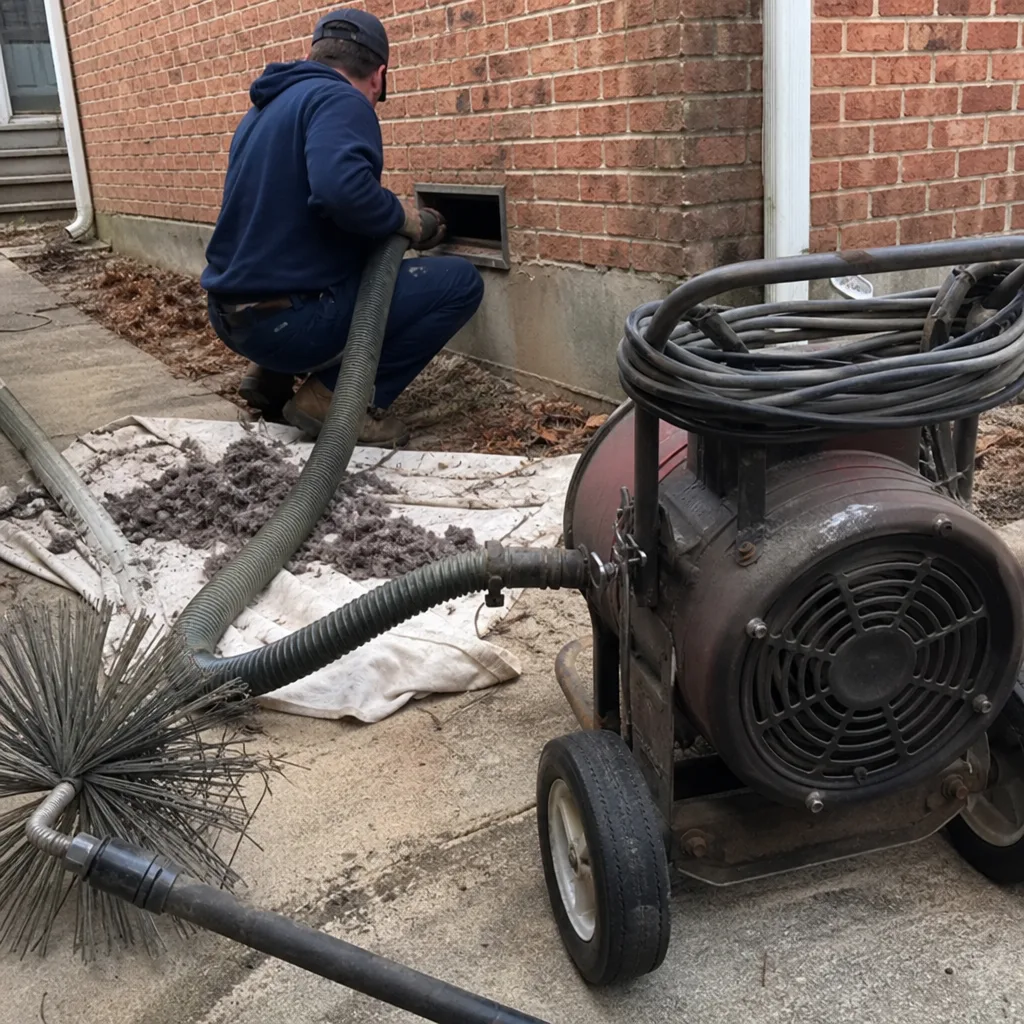
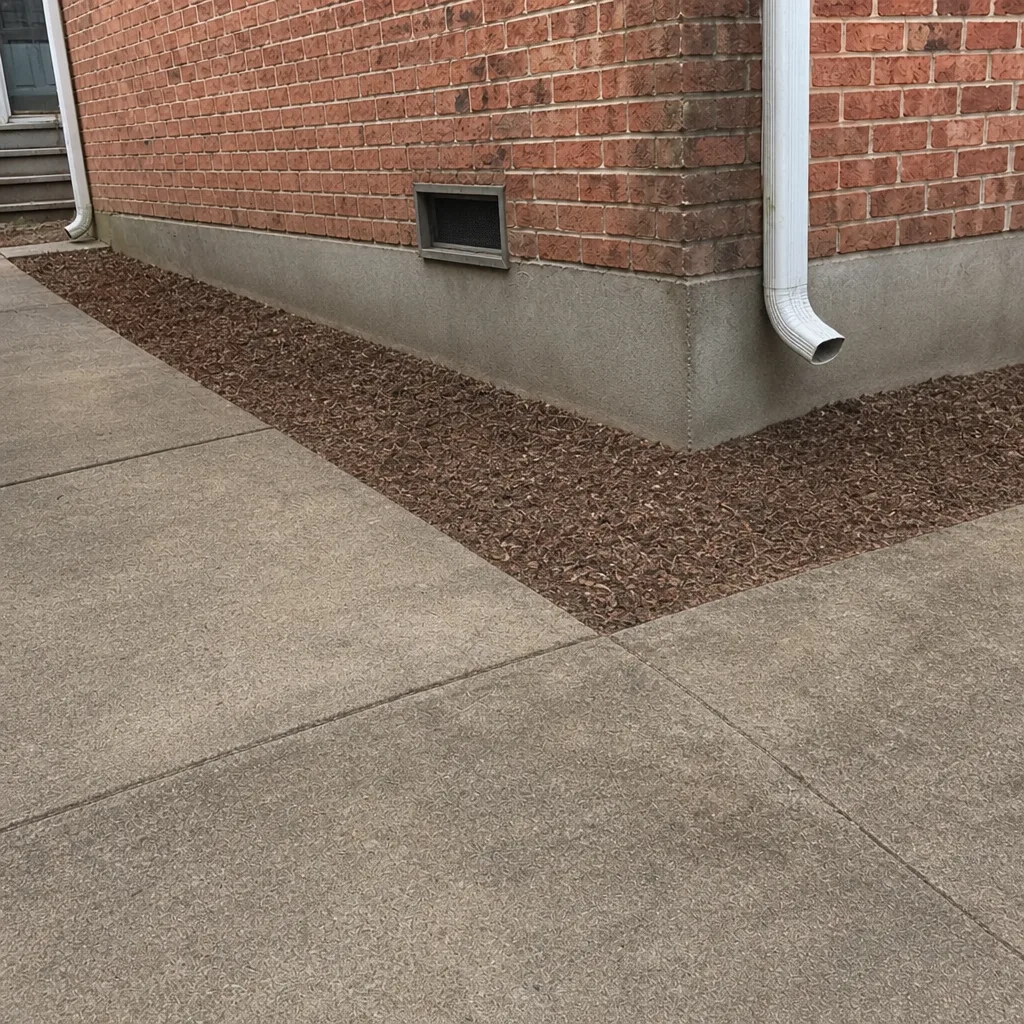
Dryer vents. A closely related hazard lives in the same utility area of many homes. Dryer vent cleaning removes lint that builds up in the exhaust path, addressing a fire and efficiency concern that most duct-only specialists skip entirely. It’s a natural add-on when a technician is already working on the home’s air movement.
Post-Cleaning Verification: What a Credible Contractor Documents
A credible contractor can show you what was done, not just tell you. Ask for these items and you’ll quickly separate a full-pathway job from a surface pass.
- Written scope before the work starts. The scope should list each component to be cleaned: returns, trunk lines, branch runs, air handler cabinet, blower, coil and supply registers.
- Before-and-after photos of your own system. Not stock images, not a slideshow, but pictures of the ducts and air handler in your home.
- Airflow measurements. Static pressure readings or simple airflow checks taken before and after cleaning show whether the system is moving air more freely.
- Documentation of any repairs or sealing. If access panels were cut or joints sealed, the contractor should note what was addressed.
- A clear statement of what was excluded. If a section of duct wasn’t accessible, you should know that before you pay, not after.
Ask for this up front, and you’ll avoid the most common frustration in this trade: paying for a name and getting a partial job. A contractor confident in the work won’t hesitate to document it.
What Air Duct Cleaning Costs in Donelson
Air duct cleaning in Donelson is priced per system, based on the size and configuration of the system, not the number of vents. A typical whole-system cleaning ranges from about $300 to $700, with larger homes or systems that include the air handler and coil landing at the higher end of that range. The written estimate sets the final price, and the estimate itself is free.
Be wary of the coupon price. A low teaser figure that balloons once the technician arrives is the signature move of the bait-and-switch operator, and it usually signals a blow-and-go job rather than source removal. Ask three questions before you book:
- Is the air handler, blower and coil included in the price?
- What equipment is used, and is it a HEPA-rated vacuum with a rotary brush?
- Will I get before-and-after photos and a written scope?
One flat price per system, agreed before work starts, no per-vent charges, and documented results: that’s what a credible quote looks like. For a related look at the commercial-scale side of ductwork, see our page on HVAC cleaning.
Common Mistakes to Avoid
- Hiring on price alone. The lowest quote is usually the blow-and-go quote, and you’ll pay for it in labor to clean your house afterward. Ask what equipment and scope are included before comparing numbers.
- Skipping the air handler. A crew that never opens the air handler cabinet is leaving the dirtiest part of the system untouched. Make sure the scope includes the blower and coil.
- Believing the vents-equal-price pitch. Per-vent pricing rewards speed over thoroughness. A whole-system price based on the written estimate is the honest way to quote.
- Not asking for photos. Before-and-after photos of your own ducts are the simplest proof of work done. If a contractor won’t provide them, that’s your answer.
- Assuming new homes don’t need cleaning. Construction dust, drywall powder and manufacturing debris settle into ducts long after the build is finished, and flexible duct traps it in its corrugations.
- Ignoring musty smells. A smell that appears when the AC kicks on often points to biological growth on the coil or in the air handler area. Cleaning alone may not address it; sanitizing after cleaning might.
- Forgetting the dryer vent. Lint buildup in the dryer vent is a fire and efficiency concern that most duct cleaners never mention. Ask about it during the same visit.
See the difference
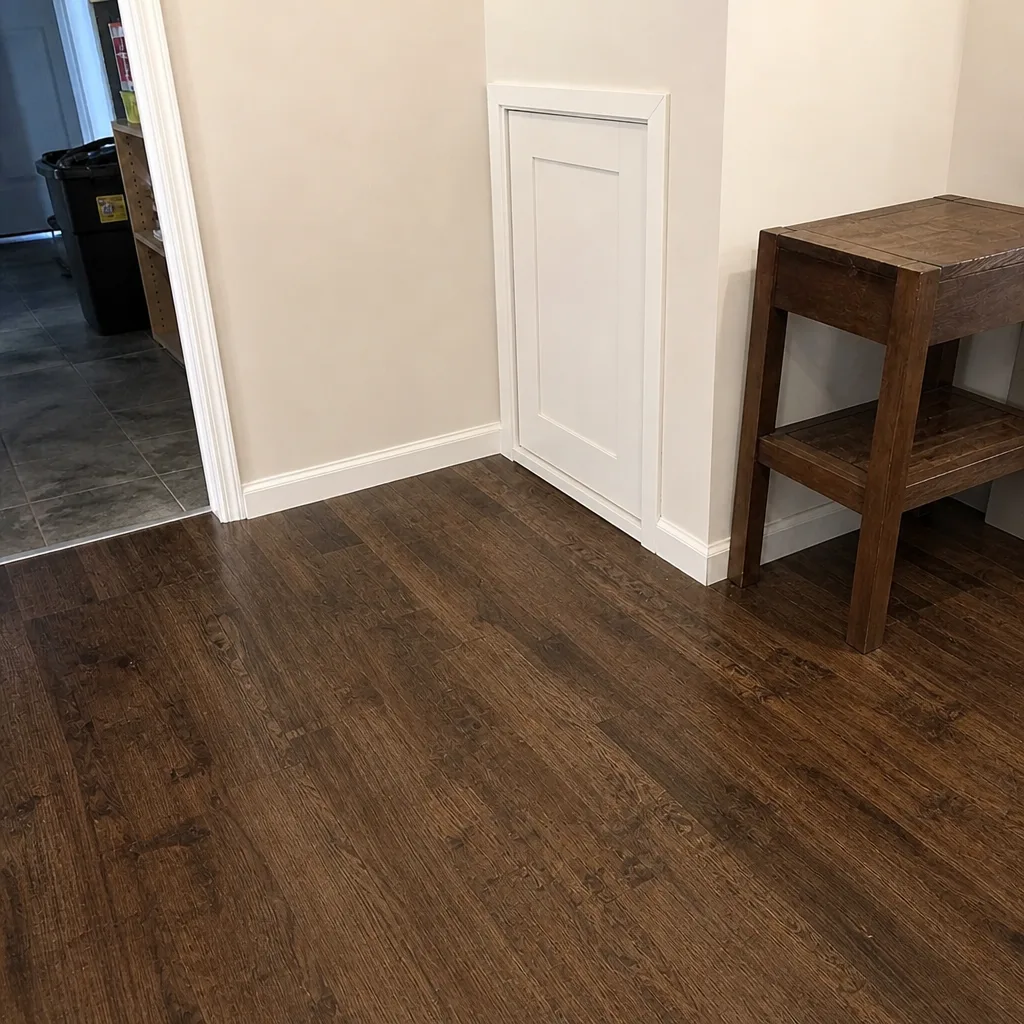
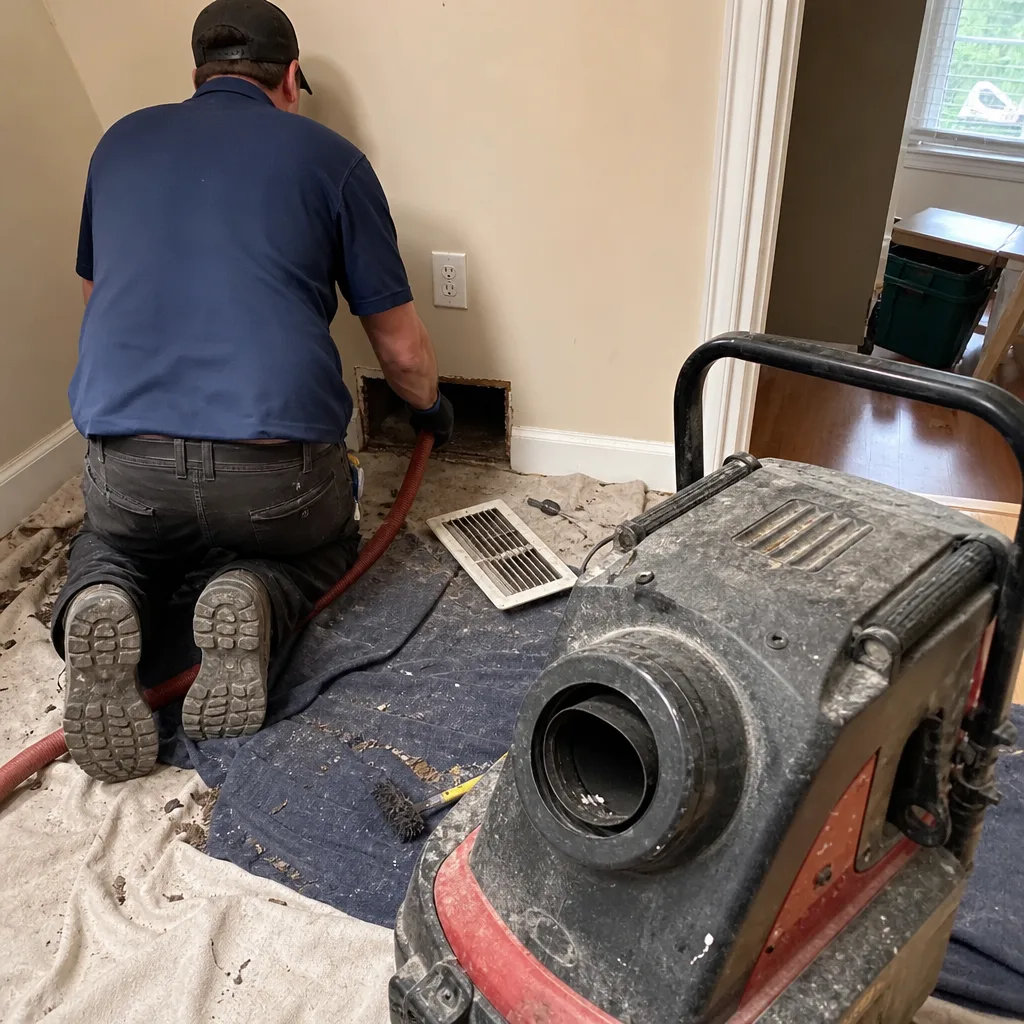 Before
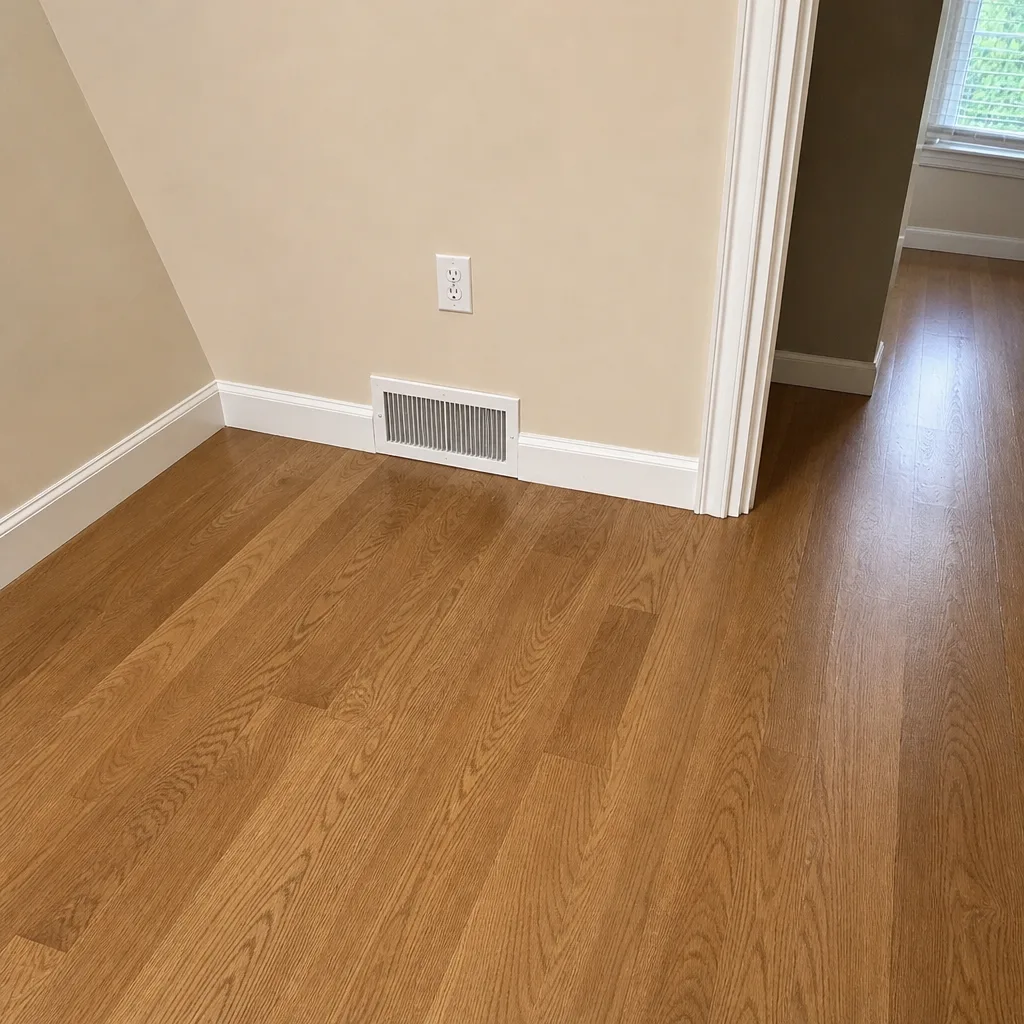 After
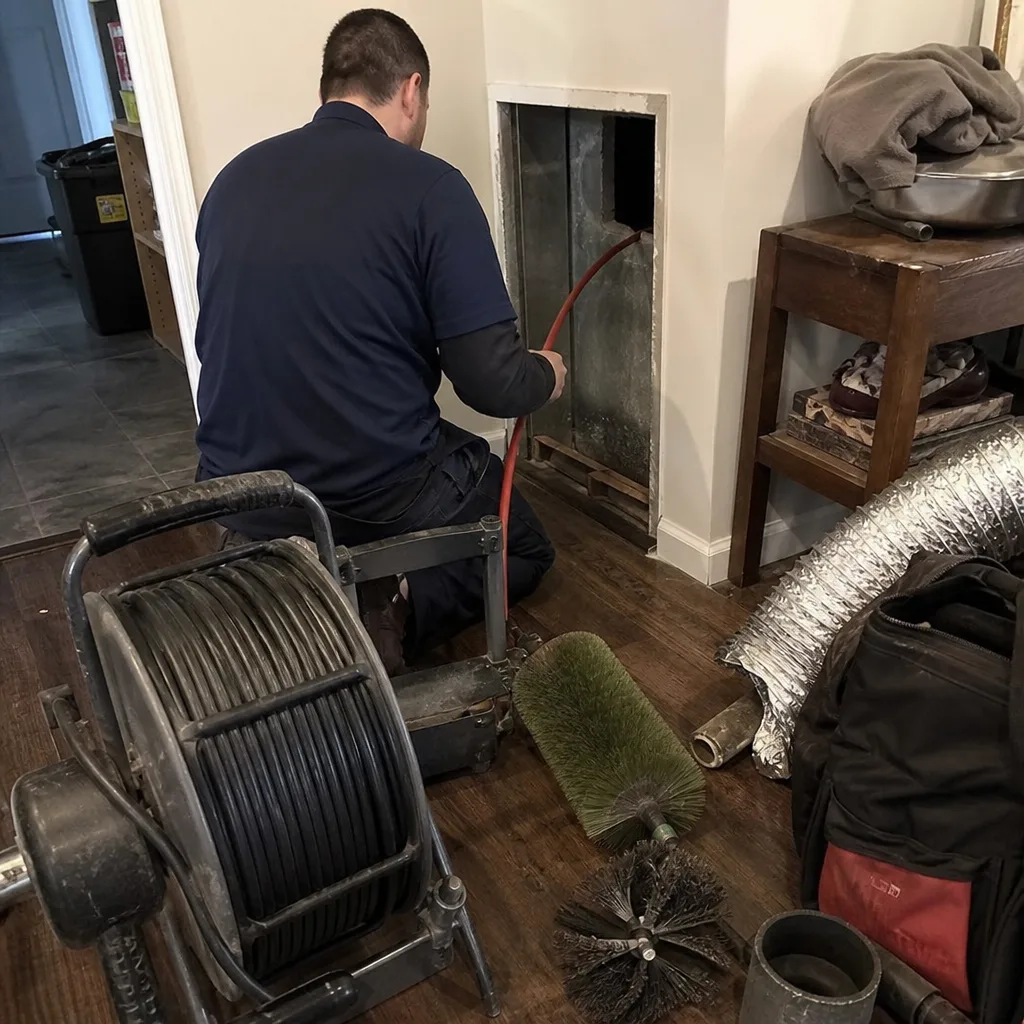 Before
 After
 Before
 After
When to Call a Professional
Some problems are worth a phone call rather than a weekend of DIY. If your home has visible dust blowing from the registers, a musty smell when the system runs, or a recent renovation that left construction dust behind, a professional cleaning is the practical next step. The same goes for a system that’s never been serviced, a blower wheel that looks caked, or ductwork with visible gaps and disconnected joints. These are jobs for professional-grade equipment, not a shop-vac and a brush. Donelson homeowners can get a free estimate from us by calling (866) 947-9316. We answer 24/7. Fast dispatch from 7am to 7pm, Sunday through Friday, closed Saturday.
Frequently Asked Questions
Most whole-system cleanings in Donelson run from about $300 to $700, with the final price set by the written estimate. The range reflects system size and whether the air handler, blower and coil are included. Call (866) 947-9316 for an exact quote; estimates are free.
Cheap quotes usually skip something: the air handler, the coil, branch runs, or the vacuum that actually captures the debris. A low figure that grows once the technician is on site is the signature of a bait-and-switch job. Ask what’s included, and compare scope rather than price.
You should get before-and-after photos of your own system, a written scope of the components cleaned, and airflow readings taken before and after. A credible contractor documents the job because they’re not afraid to show it.
Most homes benefit from a cleaning every few years, though homes with pets, allergies, recent renovations or heavy use may need it sooner. In Donelson’s humid climate, a system with moisture issues or visible growth should be inspected sooner rather than later. Call (866) 947-9316 to talk through your home’s specifics; estimates are free.
It can, since a clean system stops redistributing dust, pollen and dander through the house. Pairing cleaning with a better filter setup, or a Honeywell or Aprilaire component, reduces how fast the system loads up again.
Yes, and we recommend it. The air handler cabinet, blower wheel and evaporator coil are the most frequently skipped parts of the system, and cleaning them is part of a complete scope. Call (866) 947-9316 for a free estimate that covers the whole pathway.
For more on the local service, visit Air Duct Cleaning Donelson, and if your utility area needs attention too, see our guide to dryer vent cleaning.
The Bottom Line
A complete air duct cleaning in Donelson covers the whole air pathway, from return grilles through the air handler to every supply register, and it ends with documentation of what was done. Donelson’s older ranch and split-level homes, its humid climate and its heavy seasonal allergen load all make full-system cleaning the right approach. Source removal, professional-grade equipment, a written scope, before-and-after photos and a flat price per system are the marks of a credible job. Anything less is a surface pass. Call (866) 947-9316 for a free estimate. We answer 24/7. Fast dispatch from 7am to 7pm, Sunday through Friday, closed Saturday.
Written by the team at Air Duct Cleaning Donelson.